Henna has been used to color hair and skin for over 5,000 years, across civilizations from ancient Egypt to the Indian subcontinent to the Middle East. And yet, in the span of a few decades, it went from being one of the most trusted botanical hair treatments in the world to something many people are actively warned against.
The misinformation is remarkable. Henna damages hair. Henna dries your hair out. Henna turns everything orange. Henna is unsafe. Stylists will refuse to work on your hair if you've used it.
Some of these claims have a grain of truth buried under layers of confusion. Others are simply wrong. Almost all of them stem from a failure to distinguish between pure henna and the adulterated products that borrowed its name.
This article is our attempt to lay out the actual science. We'll look at how henna works at the molecular level, why it got such a bad reputation, what it genuinely does well, how to use it for conditioning and for color, and how to deal with the dryness that some people experience after application. Every factual claim here is traceable to peer-reviewed literature or established chemistry. Where the evidence is limited, we'll say so.
What Happens When Henna Meets Your Hair
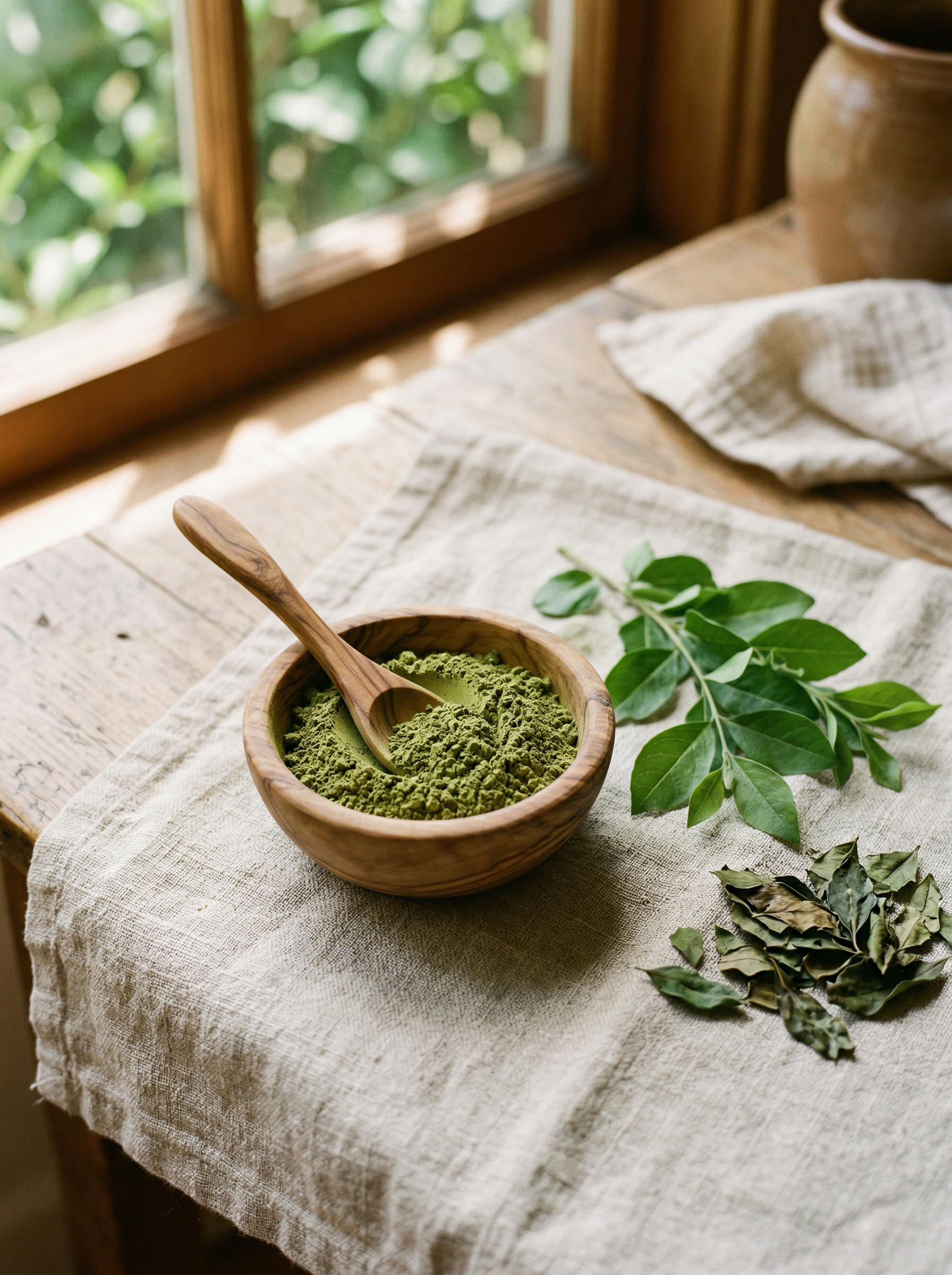
The active dye molecule in henna is lawsone (2-hydroxy-1,4-naphthoquinone), a naturally occurring compound found primarily in the leaves of Lawsonia inermis. When henna powder is mixed with a mildly acidic liquid and left to sit, the lawsone molecules are released from their sugar-bound precursors (called hennosides) and become available to bind to proteins.
The binding mechanism is a Michael addition reaction. Lawsone acts as a Michael acceptor: its electrophilic quinone structure reacts with the nucleophilic amino acid residues (particularly the thiol groups of cysteine and the amino groups of lysine) in keratin, the primary structural protein of hair. This forms a covalent bond, meaning lawsone becomes permanently part of the hair's protein structure.
This is fundamentally different from how commercial oxidative hair dyes work. Commercial dyes use ammonia to force open the hair cuticle, then hydrogen peroxide to oxidize existing melanin (lightening the hair) and activate dye intermediates inside the cortex. That process breaks disulfide bonds in keratin and structurally weakens the hair shaft.
Henna does none of this. Lawsone migrates into the outer keratin layers of the hair and bonds there without disrupting the internal structure. No cuticle is forced open. No disulfide bonds are broken. The hair shaft is not weakened; it is, by most measures, reinforced.
Lawsone does not coat the hair shaft like a film. It migrates into the outer keratin layers and binds chemically, from the inside. The difference is like pouring sprinkles over an ice cream cone versus dipping it in a chocolate shell.
Mehandi.com / Ancient Sunrise
After application, the color continues to develop over 24 to 48 hours as the bound lawsone oxidizes in air. The initial bright orange gradually deepens to a richer auburn or red-brown, depending on your natural hair color. This oxidation process is why henna-treated hair looks different on day one versus day three.
Why People Stopped Using Henna
The decline of henna's reputation can be traced to three specific problems, none of which are actually about pure henna.
"Black Henna" and PPD Contamination
Pure henna does not produce black. It produces shades in the orange-to-red spectrum. Products marketed as "black henna" or "dark henna" almost always contain para-phenylenediamine (PPD), a potent contact allergen used in permanent hair dyes and temporary tattoo inks.
PPD is a prehapten that crosses the skin barrier easily and is oxidized within the skin to allergenic haptens, triggering a Type IV delayed hypersensitivity reaction. According to Mukkanna et al. (2017), the frequency of contact allergy induction from "black henna" tattooing is estimated at 2.5% per application. Positive patch test rates to PPD run approximately 6.2% in North America and 4% in Europe.
The allergic reactions can be severe: blistering, eczema, and scarring at the application site, sometimes requiring medical intervention. Worse, once someone is sensitized to PPD from a "black henna" tattoo, they become allergic to PPD in all forms, including most commercial permanent hair dyes, certain clothing dyes, rubber products, and even some medications. Children who get "black henna" temporary tattoos on holiday are being set up for a lifetime of PPD sensitivity.
This entire category of harm has nothing to do with Lawsonia inermis. It is caused by an adulterant that was added to a product misusing the word "henna."
Compound Henna and Metallic Salts
Beyond PPD, many products sold as "henna" in pharmacies and beauty supply stores are compound henna: mixtures of henna with metallic salts (lead acetate, silver nitrate, bismuth) to produce darker or more predictable colors.
Metallic salts react violently with the ammonia and hydrogen peroxide in permanent hair dyes. If a stylist applies permanent color over hair treated with metallic salt henna, the hair can heat up, smoke, and literally disintegrate. This is the origin of the widespread stylist warning: "never apply chemicals over henna."
That warning is correct for compound henna. It does not apply to pure Lawsonia inermis, which contains no metallic salts and does not react with chemical dye systems. But the distinction was never widely communicated, and the blanket warning stuck.
The Convenience Gap
Commercial hair dyes deliver results in 30 to 45 minutes in a salon chair. Henna requires 8 to 12 hours of paste preparation, 2 to 6 hours of application time, and a messier process. For a world that increasingly valued speed and convenience, henna simply could not compete on those terms, even if the results were, in some ways, superior.
There are broadly three categories sold under the name "henna": (1) BAQ (Body Art Quality) henna, which is 100% pure Lawsonia inermis leaf powder; (2) compound henna, which contains metallic salts, PPD, or other chemical additives; and (3) products labeled "henna" that may contain no actual henna at all. The term "BAQ henna" was coined by henna researcher Catherine Cartwright-Jones, PhD, to distinguish pure henna from adulterated products. When this article says "henna," we mean BAQ unless stated otherwise.
Myths and Misinformation
"Henna Damages Hair"
This is the most persistent myth, and it is wrong for pure henna. As described above, henna does not break disulfide bonds, does not force open the cuticle, and does not strip melanin. It adds to the hair structure rather than subtracting from it.
The confusion comes from compound henna. Metallic salts in compound henna genuinely can damage hair, especially when followed by chemical processing. The dramatic salon incidents where hair broke off and disintegrated were caused by metallic salt reactions, not by lawsone. But the story that got told was simply "henna damages hair."
"Henna Makes Hair Dry"
This one is partially true in specific circumstances, but the mechanism is widely misunderstood. We'll address this in full detail in its own section below.
"Henna Only Turns Hair Orange"
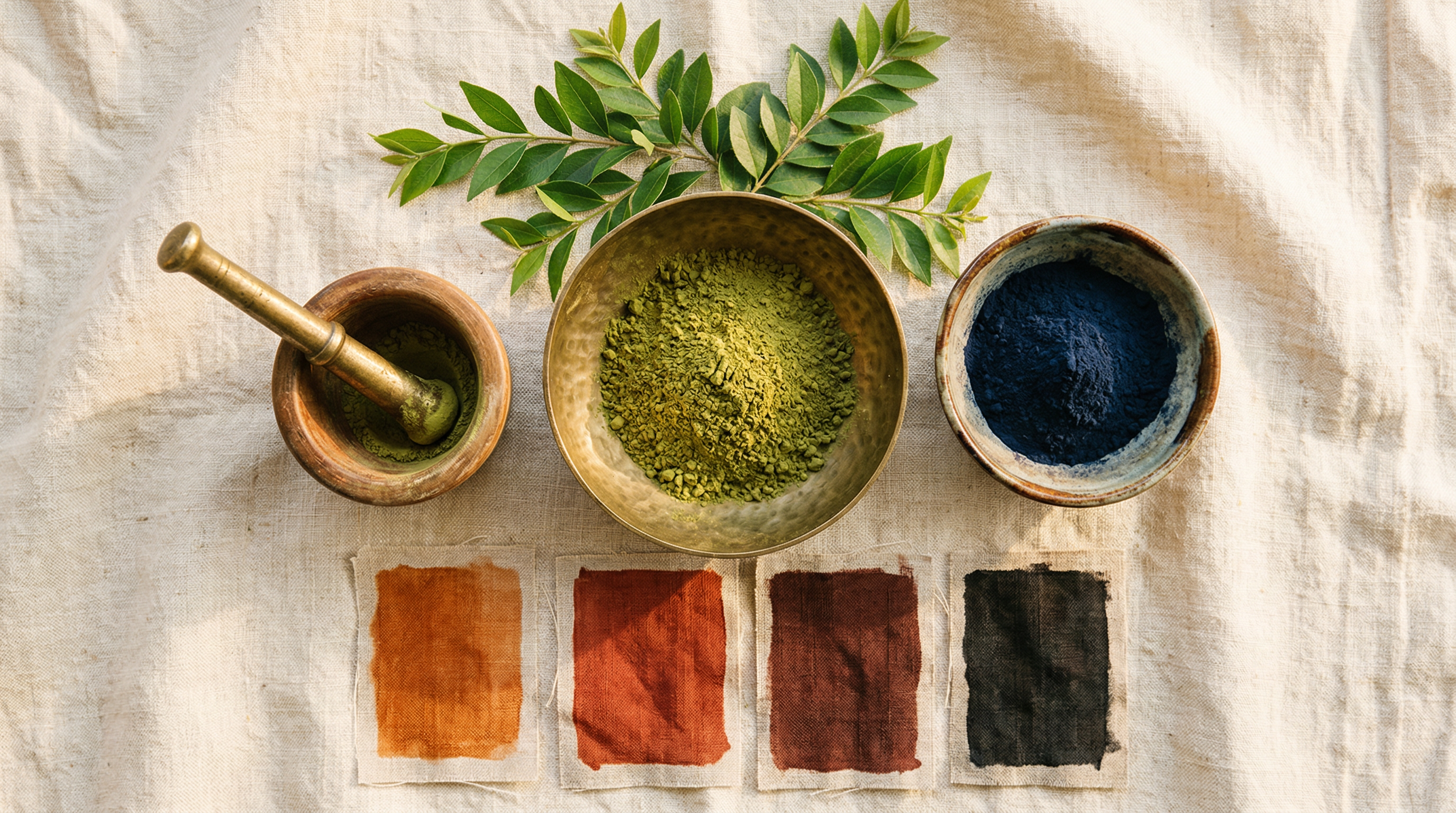
Pure Lawsonia inermis does only produce orange-to-red stains. On white or gray hair, the result is bright copper-orange. On light brown hair, it's vivid red-auburn. On dark brown hair, you'll see red-brown highlights that show primarily in sunlight.
However, by combining henna with indigo (Indigofera tinctoria) in a two-step process, the full spectrum from auburn to chocolate brown to near-black is achievable. The myth that henna can only produce one color reflects an incomplete understanding of botanical hair dyeing.
"Henna Is Hard to Wash Out"
Lawsone's Michael addition bond with keratin is covalent and permanent. It will not wash out with shampoo. This is by design. The stain fades only as the stained hair cells grow out and the outer keratin layers naturally exfoliate over months.
What people usually mean by "hard to wash out" is that the paste itself is messy to rinse, which is true. The correct way to think about henna is that it is a semi-permanent to permanent dye: permanent in the sense that it doesn't shampoo out, semi-permanent in that new growth is undyed and the existing color gradually grows out.
"All Henna Is the Same"
This may be the most damaging myth. A product labeled "henna" could be 100% pure plant powder, or it could contain PPD, metallic salts, synthetic dyes, or powders from entirely different plant species (what's sold as "neutral henna" is often Cassia obovata, which is not henna at all). Without reading ingredients carefully, there is no way to know.
Henna for Conditioning: What the Evidence Shows
The conditioning benefits of henna are supported by several well-understood mechanisms, though we should be honest that large-scale clinical trials specifically measuring hair conditioning outcomes are not available. The evidence is mechanistic, structural (SEM imaging), and consistent with the underlying chemistry.
Filling Cuticle Gaps
Hair cuticle cells are overlapping keratin scales that protect the inner cortex. Damage from heat, chemical treatments, UV exposure, and mechanical stress creates gaps and chips in this structure. When lawsone migrates into the outer keratin layers and forms covalent bonds, it fills these microscopic surface gaps, restoring a smoother surface. This increases light reflection (producing shine), reduces friction between strands (reducing frizz and tangling), and decreases moisture loss from the cortex.
Cahuantzi et al. (2025) documented this directly using scanning electron microscopy (SEM), finding that "SEM imaging revealed the dye's restorative effects, progressively improving hair cuticle structure with each application."
Strengthening the Hair Shaft
By covalently bonding to keratin proteins, lawsone adds cross-linking and structural reinforcement to the hair shaft. This is functionally similar to what protein treatments do, but through a different chemical mechanism. Studies on textile fibers confirm that lawsone treatment increases tensile strength of keratin-based materials.
UV Protection
Lawsone strongly absorbs ultraviolet light. Henna applied to hair acts as a UV filter, protecting the underlying keratin and melanin from photodegradation. The Cahuantzi et al. (2025) study measured this directly: henna-treated hair showed a color change (delta E) of only 2.96 after 720 hours of UV exposure, compared to 17.34 for untreated hair.
Antimicrobial Scalp Benefits
Henna contains multiple compounds with documented antimicrobial and antifungal properties: lawsone, chlorogenic acid, ellagic acid, tannins, and flavonoids. Al-Rubiay et al. (2008) confirmed the antimicrobial efficacy of henna extracts, supporting its traditional use for scalp health.
Most conditioning claims about henna circulate within user communities and brands, with limited high-quality randomized controlled trial data. The mechanisms are scientifically plausible and consistent with lawsone's known chemistry. The SEM evidence (Cahuantzi, 2025) is the most direct structural documentation available. We believe the conditioning story is real, but we want to be clear about where the evidence stands.
The Two-Step Method: Henna and Indigo for Brown to Black
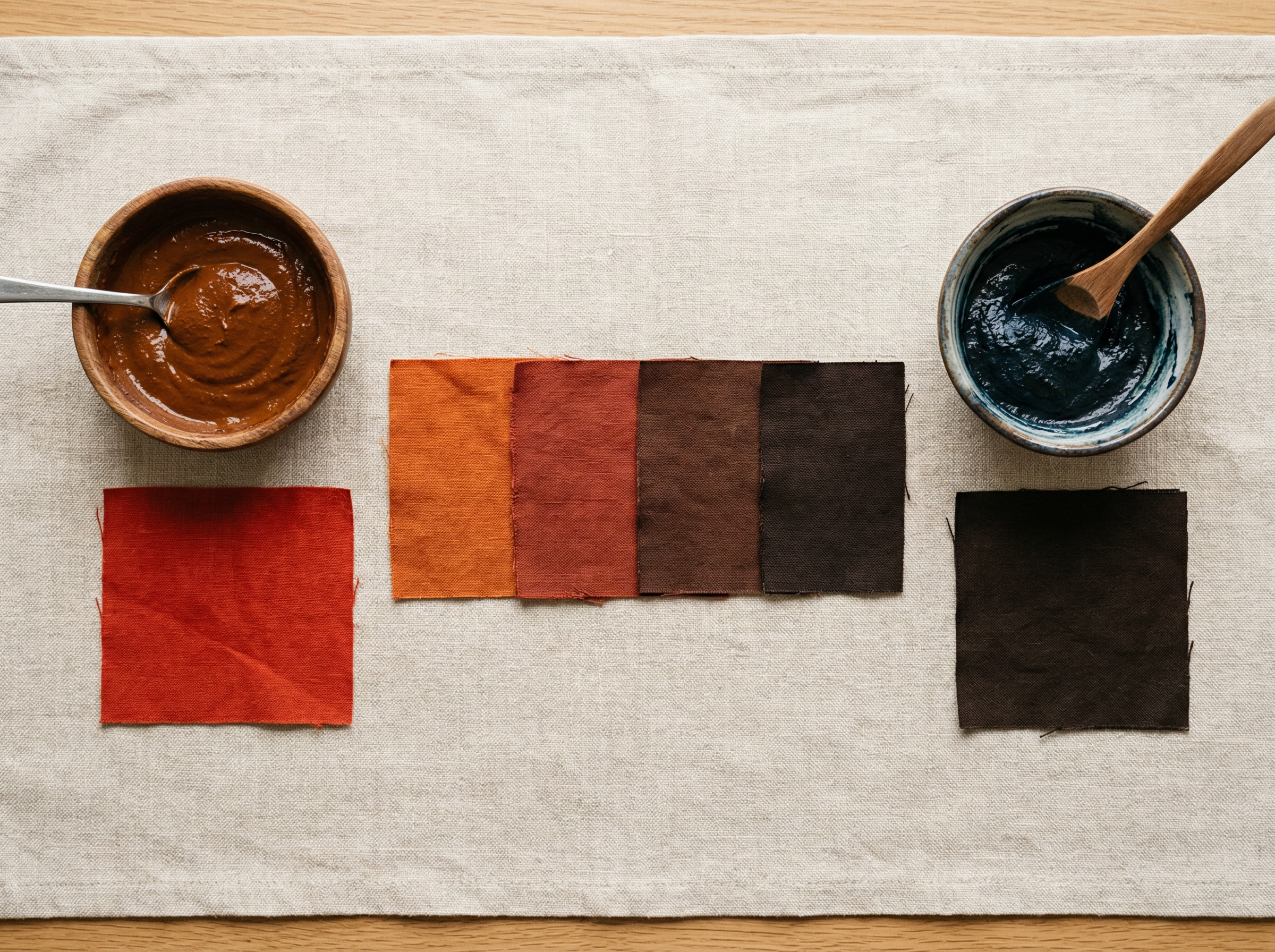
If you want colors beyond the red spectrum, the answer is the two-step process combining henna with indigo (Indigofera tinctoria). This method has been used for centuries, and the chemistry behind it explains exactly why it works.
Why Two Steps?
Indigo leaves don't contain the blue pigment directly. They contain indican, a colorless precursor. When the leaves are processed, indican is hydrolyzed to release indoxyl, which is the actual dye molecule. Two indoxyl molecules then combine oxidatively to form indigotin (indigo blue).
Here's the critical distinction: indoxyl can bind to keratin and dye hair. Indigotin, the fully oxidized blue pigment, cannot. It will simply wash out. This means indigo powder must be mixed with water and applied immediately, before the indoxyl oxidizes to indigotin on the paste surface (which begins happening within about 20 minutes, visible as a metallic blue-green sheen).
This is the exact opposite of henna, which needs 8 to 12 hours of dye release before application. These incompatible timelines are why the two-step process exists and why premixed "black henna" products that try to combine both in one step consistently produce weak, fading, off-tone results.
How the Colors Work Together
When henna is applied first, lawsone bonds to the outer keratin and produces an orange-red base. When indigo is applied over this in Step 2, the indoxyl migrates into the same keratin layers and interacts with the lawsone-modified surface. The combined orange-red from lawsone plus blue from indoxyl produces brown tones. This is not simple color mixing; it is an interaction of two chromophores at the molecular level on the keratin substrate.
Indigo alone on unhennaed hair produces a dull grayish dark blue, similar to the look of new unwashed denim. It does not produce black or brown without the henna base layer.
Color Results
The ratio and method determine the final shade:
- Henna only: orange to deep red
- One-step mix, 70:30 henna:indigo: reddish brown
- One-step mix, 50:50: medium brunette
- One-step mix, 25:75: dark brunette
- Two-step sequential (full henna, then full indigo): deep brown to black
For the darkest results, two separate full applications are needed: a complete henna treatment, followed within 24 to 72 hours by a complete indigo application.
Practical Steps
Step 1, Henna: Mix henna powder with a mildly acidic liquid (diluted apple cider vinegar, weak citric acid solution, or fruit juice). Cover and leave at room temperature for 8 to 12 hours for dye release. Apply to hair and leave for 2 to 6 hours. Rinse thoroughly and wash with conditioner only.
Step 2, Indigo: Mix indigo powder with plain water (no acid) immediately before application. Apply at once. Leave on for 1 to 2 hours. Rinse and condition. The initial grayish-green tone is temporary; the final color develops brown to black over 24 to 48 hours as the remaining indoxyl oxidizes on the hair.
Post-Henna Dryness: What's Actually Happening
This is the complaint with the most truth behind it, but the reality is more nuanced than "henna dries your hair." There are several distinct mechanisms at work, and understanding them changes how you approach the problem.
Tannin Astringency
Henna leaves contain tannins (polyphenols including ellagic acid and chlorogenic acid). Tannins are astringent: they cause proteins to contract. This creates a tightening sensation on hair, similar to the mouth-puckering effect of red wine or unripe persimmon. The hair shaft proteins contract slightly, producing a feeling of stiffness or dryness that is not the same as actual water depletion. This effect typically resolves within 24 to 48 hours.
Cuticle Swelling
During application, the moisture and acidity of the paste temporarily cause the outer cuticle scales to swell. When the paste is removed, these cuticles are still temporarily raised, creating a rough texture that we interpret as "dry" or coarse. This is comparable to how fingertips pucker after prolonged water immersion. The cuticles settle back within a day or two.
Residual Paste
This is more common than people realize. Incompletely rinsed henna paste leaves fine plant particulates in the hair, which produces a gritty, rough texture that feels like dry, damaged hair. Thorough rinsing is essential, and many experienced users recommend submerging the hair in a full bathtub rather than relying on a shower stream alone.
Overly Acidic Mixes
This is where genuine dryness can occur. Highly acidic preparations, particularly those using straight undiluted lemon juice as the mixing liquid, can strip scalp oils and genuinely dry both hair and scalp. The acidity needed for dye release is mild; undiluted lemon juice is far more acidic than necessary.
Protein Overload
With very frequent henna applications (monthly or more on already healthy hair), the accumulated protein binding can create what's called protein overload. Hair becomes stiff, loses elasticity, and is more prone to snapping when stretched. This is not chemical damage; it is a mechanical over-stiffening that can be balanced with moisture-focused treatments.
Preventing it: Use a mild acid (diluted apple cider vinegar or weak citric acid solution) instead of straight lemon juice. Add humectant ingredients to the paste: fenugreek seed gel, flaxseed gel, or aloe vera gel. Do not add oils to the paste (they block lawsone uptake), but do oil the hair the day before and deep-condition afterward.
Treating it after: Rinse extremely thoroughly, ideally by submerging the hair. Follow with a generous conditioner. Apply a diluted apple cider vinegar rinse (about one tablespoon per cup of water) to close the cuticle and restore shine. Deep condition with humectant-rich masks (aloe, flaxseed, honey) 24 to 48 hours after treatment. Oil treatments (coconut, argan, olive) work well once the color has fully oxidized.
Long-term: Avoid excessive frequency. Do roots-only applications between full treatments to prevent protein overload.
Safety: What You Should Genuinely Be Cautious About
Being honest about henna means being honest about its safety profile too. Pure BAQ henna is safe for the overwhelming majority of adults. But there are two areas of legitimate concern.
PPD in "Black Henna"
We've covered this above, but it bears repeating: any product labeled "black henna" almost certainly contains PPD. The clinical literature (Mukkanna et al., 2017) documents that PPD sensitization can occur on a single exposure, and once sensitized, the allergy is lifelong. Cross-reactions extend to permanent hair dyes, rubber products, certain textiles, benzocaine, sulfonamide antibiotics, and PABA-containing sunscreens. Always patch test, and never use a product labeled "black henna."
G6PD Deficiency and Infants
This is less widely known but important. Lawsone is structurally similar to menadione and other naphthoquinones that are known oxidative hemolytic agents. In individuals with glucose-6-phosphate dehydrogenase (G6PD) deficiency, lawsone can cause the red blood cells to rupture (hemolysis), leading to hemolytic anemia.
G6PD deficiency is the most common human enzymopathy, affecting an estimated 330 to 500 million people worldwide, with highest prevalence in sub-Saharan Africa, the Middle East, Mediterranean countries, and Southeast Asia. It is X-linked recessive, primarily affecting males.
As documented by McMillan et al. (2004) in Toxicological Sciences, lawsone induces oxidative injury to red blood cells in a dose-dependent manner. In individuals with normal G6PD activity, this oxidant stress is rapidly neutralized. In G6PD-deficient individuals, the defenses are overwhelmed.
Most documented severe cases involve topical skin application in neonates and infants, where the surface-area-to-body-weight ratio is high and G6PD levels are physiologically lower. Symptoms include pallor, jaundice, and dark urine, and can progress to kidney failure. Henna should not be applied extensively to the skin of neonates or infants. Adults with known G6PD deficiency should also avoid henna.
The Genotoxicity Question
Kirkland and Marzin (2003) found lawsone positive in some bacterial mutagenicity assays (Ames test), raising a flag for potential genotoxicity. However, the relevance of bacterial in vitro assays to human topical use is uncertain. Lawsone has been used cosmetically for thousands of years with no documented cancer signal attributable to pure henna. No epidemiological studies linking pure henna hair use to cancer have been published. The EU's Scientific Committee on Consumer Safety has reviewed lawsone and established usage guidelines for cosmetic products. The data exist, the practical significance is unclear, and routine hair dyeing with pure henna appears safe for most adults based on extensive historical use.
What We Think, Honestly
Henna is not a miracle product. It is a naturally derived dye with well-understood chemistry, genuine conditioning benefits supported by structural evidence, and a legitimate safety profile that is considerably gentler than most commercial alternatives for the vast majority of users.
The misinformation around henna is not random. It is the accumulated result of adulterated products being sold under its name, a convenience-driven market that had no incentive to educate people about the difference, and a beauty industry that profits from selling faster, more chemically intensive alternatives.
If you choose to use henna, use pure BAQ henna from a reputable source. If you want brown or black, learn the two-step method rather than buying premixed products that will underdeliver. Prepare for the time commitment. And take care of the post-treatment dryness with the techniques above.
The science supports henna's use. The science also supports being honest about its limitations and its safety profile. That honesty is, we think, more useful than either the exaggerated fear or the exaggerated claims that have surrounded this plant for decades.